
Knee Arthroscopy Treatment in Ahmedabad
Minimally Invasive Surgery for Knee Conditions
Precise. Minimal. Effective.
Understanding Knee Arthroscopy Treatment
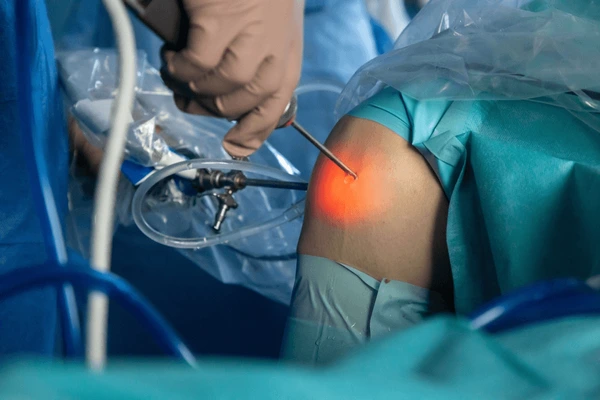
Knee arthroscopy is a minimally invasive surgical procedure used to diagnose and treat problems inside the knee joint. Instead of a large incision, a small camera (arthroscope) is inserted with tiny incision (0.5cm) allowing us to view and treat the Knee Condition with precision.
It is commonly performed to treat injuries such as torn ligaments like ACL tear, multi ligament injury, meniscus tears, cartilage damage, or to remove loose bone fragments all while preserving healthy tissue and speeding up recovery. Under expertise of Dr Krunal Soni, you will have best Knee Arthroscopy Treatment in Ahmedabad.
When is Knee Arthroscopy Recommended?
Dr. Krunal Soni may recommend knee arthroscopy if you’re experiencing:
Instability/ Knee giving way
A feeling that your knee may buckle or give way while walking, standing, or moving.
Persistent Knee pain or swelling
When discomfort doesn't improve with rest, medication, or physiotherapy.
Locking, catching and Knee feeling stuck
Mechanical symptoms that restrict your knee range of motion.
Stiffness or Restricted Range of Motion in the Knee Joint
Difficulty bending or straightening the knee may indicate structural issues.
Sports injuries involving ligaments or cartilage
For athletes with ACL, meniscus, or cartilage injuries needing precise repair.
Degenerative or traumatic joint damage
Used to treat wear-and-tear or injury-related damage without open surgery.
Multi Ligament Injury
Road traffic accidental injury can cause multiple ligament tear like ACL, PCL, MCL, LCL and affect stability of your knee joint. This needs expert reconstruction to achieve optional outcomes.
Decision-Making in Knee Arthroscopy: Why Surgeon Experience Matters
The success of knee arthroscopy depends not just on the procedure, but on the decisions made before and during surgery. An experienced surgeon ensures that every step is guided by accuracy, necessity, and long-term patient benefit.
Knowing When Surgery Is Truly Needed
Not every knee condition requires arthroscopy, and careful evaluation is essential. A competent and skilled surgeon is able to recommend the need for a certain procedure.
Selecting the Right Treatment Approach
Different knee problems require different surgical techniques. What is required is a careful planning to ensure what is undertaken is the pathway to an optimal solution
Adapting to Findings During Surgery
Arthroscopy may reveal conditions not fully visible in scans beforehand. Having necessary skills, a surgeon has the ability to accurately perform on the required surgical intervention
Balancing Short-Term Relief with Long-Term Outcomes
The ultimate goal is not only to ensure that the patient has an immediate relief of the discomfort but also maintains the health of the joint for a longer period of time.
Expertise
Why the Right Surgeon Matters in Knee Arthroscopy Treatment
Accurate Diagnosis Before Surgery
Pain and dysfunction can have a variety of causes. A skilled knee arthroscopic surgeon understands the reasons for the patient’s symptoms before suggesting arthroscopy. This prevents more drastic surgical procedures and focuses on optimal management.
Precision in Minimally Invasive Technique
Arthroscopy involves a high degree of surgical and technical skill to work in a confined space of a joint and relate to structures and systems. Pain and healing time and function recovery are highly and directly dependent on the extent of surgical precision. In knee arthroscopy treatment in Ahmedabad, expert handling ensures safer procedures and better joint preservation.
Recovery Planning for Long-Term Results
The surgeon’s role goes beyond the completion of the procedure. A patient-centric surgical approach that includes a rehabilitation plan that is of high importance to the patient. Ongoing support encourages the new habits formed and the new outcomes based on the procedure completed.
Conditions Treated with
Knee Arthroscopy
Knee Arthroscopy Treatment in Ahmedabad is highly effective in treating ACL tears, meniscus tears, ligament injuries, cartilage damage, patella issues, and joint inflammation with minimal disruption to healthy tissue.
ACL TEAR
(Anterior Cruciate Ligament)
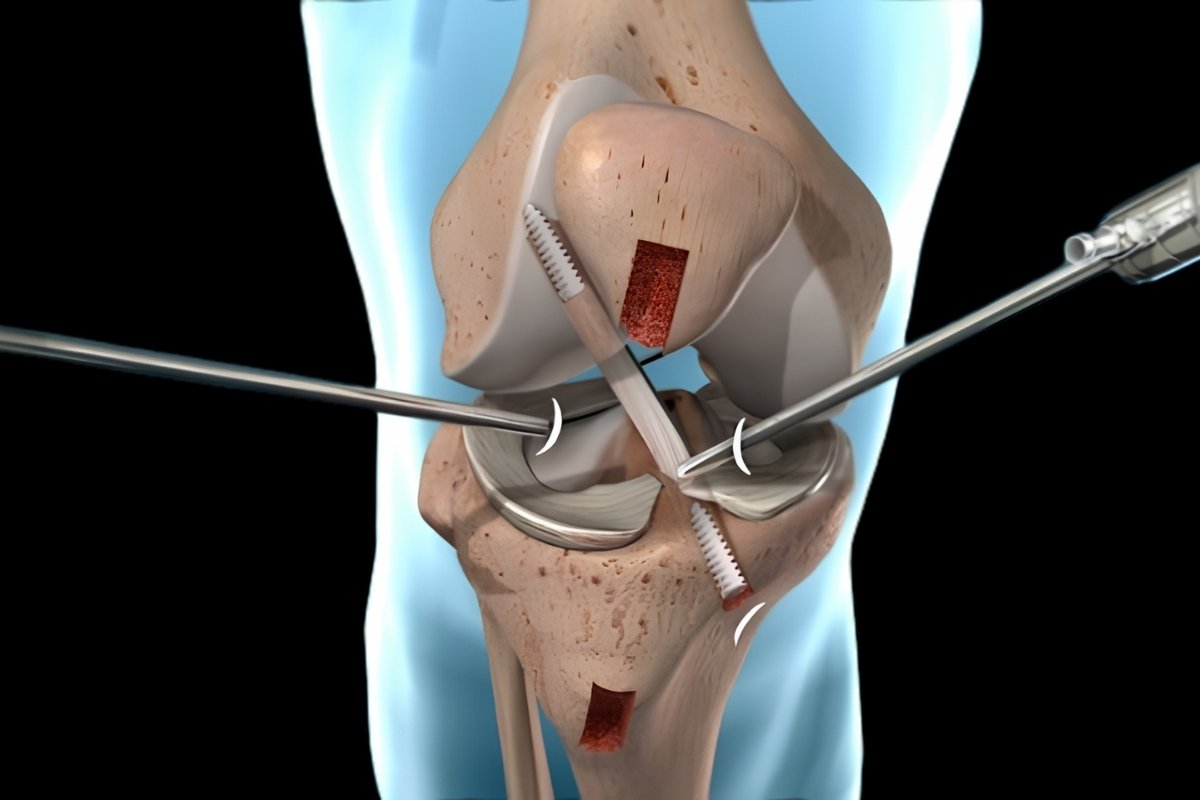
Common in bike accidents, twisting of knee or sports. ACL tears affect knee stability and function; arthroscopy helps in ligament reconstruction or repair.
Meniscus Tears
Damage to the cushions in the knee joints often caused by twisting injuries, leading to pain, swelling, or knee locking.
PCL Tear
(Posterior Cruciate Ligament)
Injuries to the PCL can cause instability, especially while walking downhill or descending stairs; may require surgical repair via arthroscopy.
Cartilage Damage or Degeneration
Worn or injured cartilage causes pain and reduced mobility; arthroscopy smoothens or repairs cartilage surfaces to protect the joint.
Patella (Kneecap) Dislocation
Kneecap or Patella Dislocation is usually seen in young adults or traumatic injuries and denotes MPFL tear and this requires Arthroscopy MPFL reconstruction
Removal of Loose Bodies or Scar Tissue
Fragments of bone, cartilage, or tissue may float in the joint, causing pain or locking; arthroscopy gently removes these obstructions.
Synovitis
(Inflamed Joint Lining)
Inflammation of the synovial membrane can cause pain and swelling; arthroscopy allows precise removal of inflamed tissue.
Benefits of Knee Arthroscopy Treatment
Small Incisions, Faster Recovery
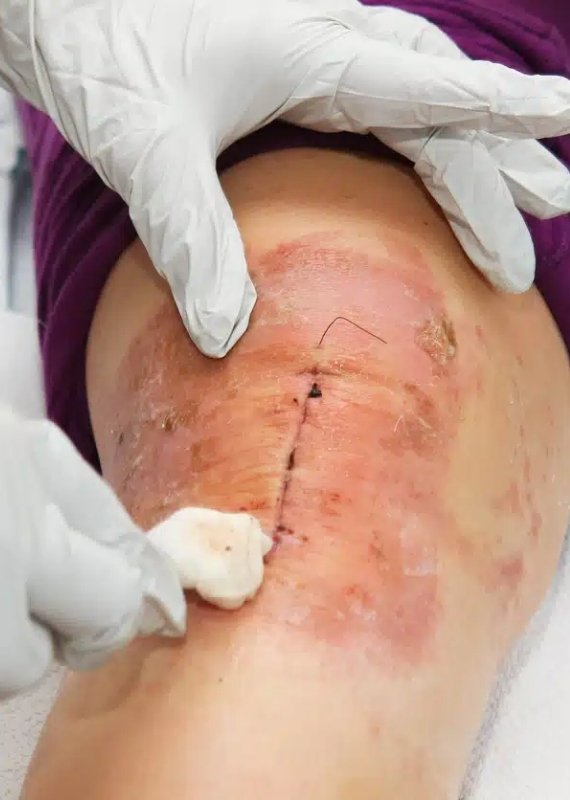
Tiny keyhole cuts reduce visible scarring and promote faster skin healing.
Reduced Pain and Swelling Post-Surgery
Minimally invasive technique signifies less tissue damage and decreased pain post surgery.
Lower Risks of Complication
The precision of arthroscopy reduces surgical and post-operative risks.
High-Definition Joint Visualization
Advanced camera systems provide clear and magnified (4x) views for accurate and precise treatment.
A Clear Look
At Your Surgical Journey
Precision at every stage of your care.
Initial Consultation & Imaging
Clinical examination and imaging (MRI/X-ray) to confirm the need for surgery.
Day of Surgery
Performed under regional or general anesthesia. Typically a 1 day stay in hospital.
Procedure
Small incisions made; camera and instruments inserted; the damaged tissue is repaired or reconstructed.
Recovery
Most patients walk the same day or the next. Recovery varies from 1 to 6 weeks depending on the surgery done.
Rehabilitation
Dedicated and individualized physio program is designed to restore strength, range of motion and return to activity or sports.
Understanding
The Role of a Surgeon in Successful Knee Arthroscopy Treatment
The surgeon’s role goes beyond performing the procedure. It begins with correct diagnosis, continues through precise surgical execution, and extends into recovery planning.
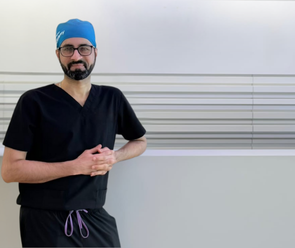
When it comes to knee arthroscopy procedures in Ahmedabad, Dr. Krunal Soni thoroughly understands the knee issues and guides the patient through recovery with the appropriated treatment.
The quality of treatment for knee arthroscopy is determined by the surgeon’s knowledge and skill. From diagnosing the root cause of knee discomfort to performing precise, minimally invasive corrections, the surgeon is involved at every phase of the procedure.
Dr. Krunal Soni's Approach
Dr. Soni brings refined expertise and a precision-based approach to every arthroscopy. From diagnosis to post-operative care, he ensures that each patient receives a personalized treatment plan that focuses on preserving mobility, restoring motion and returning you back to activity level. Using advanced surgical techniques and high-definition arthroscopic equipment, Dr. Soni performs knee surgeries with minimal trauma to surrounding tissue which is a critical factor in quick and successful outcomes.
Frequently Asked Questions
Knee arthroscopy is a minimally invasive procedure used to diagnose and treat problems inside the knee joint using a small camera and surgical instruments.
It is recommended for knee pain, ligament injuries, cartilage damage, or when non-surgical treatments are not effective.
No, it is a minimally invasive procedure with small incisions and generally faster recovery compared to open surgery.
The procedure usually takes 30 minutes to 1 hour depending on the condition being treated.
Recovery usually takes a few weeks, depending on the severity of the condition and physiotherapy support.
Yes, it is a safe and commonly performed procedure when done by an experienced orthopedic surgeon.
It includes smaller cuts, less pain, quicker recovery, and accurate diagnosis and treatment of knee problems.
A small camera is inserted into the knee joint through a tiny incision, allowing the surgeon to view and treat the problem area.